
The Importance of Contract Furniture in Care Homes
| |
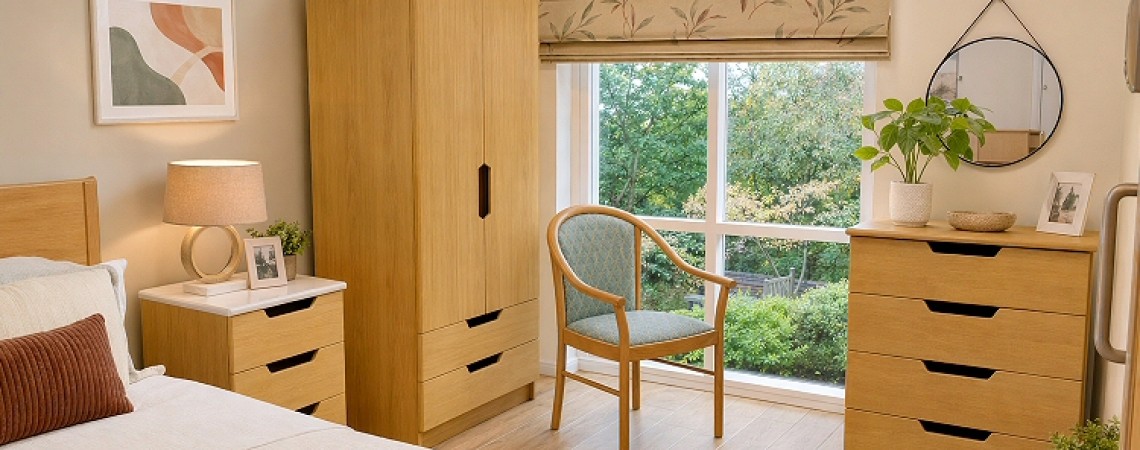
A Practical 5-Minute Guide for Care Home OperatorsCreating a "home-like" environment for residents is a top priority, but using domestic, retail-grade furniture to achieve this aesthetic is a critical operational risk. Domestic furniture is simply not built for the rigorous 24/7 demands of a care environment. For care home operators investing in purpose-built crib 5 upholstery seating and contract cabinet furniture is not just an aesthetic choice - it is a legal, clinical and financial necessity. Here is a breakdown of why contract furniture is so important. | |
Fire Safety: The Crib 5 Standard Fire safety is paramount in environments where residents have limited mobility and require extra time to evacuate. UK regulations mandate that all seating in high-risk commercial environments like care homes complies with the stringent BS5852, Crib 5 (Source 5) fire standard. Domestic Furniture: Upholstered retail furniture only passes basic smouldering cigarette and match tests. If ignited, standard foam and untreated fabrics burn rapidly, releasing highly toxic smoke. Contract Furniture: Crib 5 materials are rigorously tested with a flaming wooden structure to ensure they self-extinguish quickly without spreading flames. Operators who ignore these standards could face severe penalties. For example, the owners of Donwell House care home was fined £380,000 following a fire that started in a resident's bedroom where critical fire safety measures were ignored.* Preventing Fatal Tip-Overs Domestic Furniture: Retail cabinets are lightweight and can be top heavy. The devastating reality of furniture tipping over can be seen in the case involving the Milford House Partnership, where an 80 year-old resident with Alzheimer's disease was tragically crushed to death by a falling, freestanding domestic-style wardrobe.** Contract Furniture: Contract cabinet furniture is built with strong frames and solid backs. Many units, particularly wardrobes are supplied with tamper-proof wall-mounting options to eliminate tip-over risks completely. Infection Control: Stopping the Spread Care homes must battle Healthcare-Associated Infections (HAIs) like Norovirus, MRSA, and C.difficle daily. Furniture surfaces act as major vectors for these pathogens. Domestic Furniture: Standard fabrics absorb bodily fluids, and wood varnishes crack and peel over time, creating porous, unreachable breeding grounds for bacteria. Contract Furniture: Contract upholstery is very durable, and easy to clean and maintain. Healthcare textiles are fluid-impermeable (waterproof) and many incorporate integrated treatments like ShieldPlus, which instantly kills a broad spectrum of viruses and bacteria on contact. Likewise, contract wood finishes use advanced lacquer coatings which actively kills 99% of bacteria including MRSA and E.Coli. User Friendly Design and Ergonomics Ergonomic Seating: Domestic sofas are often too low and soft, making it dangerous and difficult for the elderly to stand up. Contract high chairs and sofas are designed with optimised seat heights and armrests to help residents stand up. Likewise, sturdy contract dining chairs with skis and armrests maximise strength and stability, comfort and functionality. User Friendly Cabinets: A 'fit-for-purpose' contract bedside, chest or wardrobe will have rounded corners and edges on lower-level cabinet tops, solid backs and strong metal drawers with solid bottoms on easy-glide drawer runners. Some furniture ranges feature dementia-friendly scoop handles or large, visual, easy-to-grasp handles that reduce confusion and anxiety. Total Cost of Ownership (TCO) It is a common mistake to view the lower upfront price of domestic furniture as a cost-saving measure. In reality, it is a big drain on operational budgets. Lifecycle: Domestic furniture placed in a commercial care setting will typically fail, break, or stain within 1 to 2 years, requiring a constant cycle of replacement. Smart Investing: Contract furniture stretches the replacement cycle to 5 to 8 years. While the initial capital expenditure is higher, the reduction in replacement frequency, maintenance costs, and liability exposure makes it significantly cheaper over its operational lifespan. Summary for Operators and Managers During inspections, the Care Quality Commission (CQC) actively audits the safety, cleanliness and suitability of your equipment under Regulation 15. Utilising broken, stained, or non-compliant domestic furniture directly jeopardises your rating and leaves your facility open to legal liability from the HSE and personal injury claims. Investing in contract-grade furniture protects your resident's lives, preserves their dignity and secures your operational stability. * SOURCE: https://www.chroniclelive.co.uk/news/north-east-news/washington-care-home-fire-results-11092529 ** SOURCE: https://www.bbc.co.uk/news/uk-england-derbyshire-36391552 |