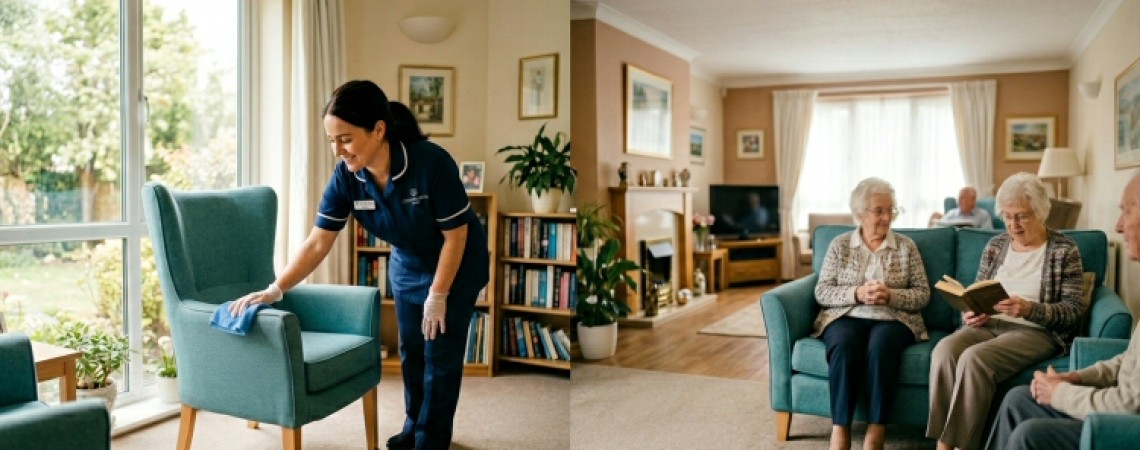
Why Proper Cleaning is Critical in Care HomesUnderstanding why strict cleaning protocols are necessary is the first step in effective care home management. Care homes are high-risk environments for cross-contamination because residents frequently have weakened immune systems, making common bacteria and viruses significantly more dangerous. Rigorous cleaning is not just about aesthetics; it is a strict regulatory expectation mandated by the Care Quality Commission (CQC) and NHS Infection Prevention and Control (IPC) standards. Maintaining these hygiene standards prevents the spread of pathogens like Norovirus or C. difficile and protects vulnerable, fragile elderly skin from infections and irritant contact dermatitis caused by un-rinsed chemical residues. Furthermore, using the correct cleaning methods protects your expensive contract furniture investments, ensuring the fabrics remain waterproof, stain-resistant, and legally compliant with strict Crib 5 fire safety regulations. |
Quick Everyday CleaningThis routine focuses on daily hygiene, dust removal, and immediate spill management to keep communal areas and bedrooms safe and presentable. Daily Wiping and Vacuuming: Vacuum furniture daily or wipe seating surfaces using a microfiber cloth lightly dampened with cold water. Microfiber threads are incredibly fine, allowing them to physically trap microscopic dirt and bacteria that standard cloths simply push around.Target High-Touch Points: Areas like chair armrests should be wiped down multiple times a day, as these are primary vectors for spreading germs from hands.Skip the Soap: Avoid standard domestic soaps for routine wiping. Soap leaves a sticky residue that clogs the fabric, actively attracts more dirt, and degrades the material's built-in stain resistance.Immediate Spill Action: Mop up excess liquids immediately with a dry, absorbent cloth. Always use cold water when treating bodily fluids (blood, urine) or food spills. Using hot water will chemically "cook" the proteins into the fabric, permanently setting the stain.
|
Intense Periodic CleaningThis level of cleaning is required for weekly room deep cleans, following a resident's discharge, or during an active viral outbreak. Managing Urine and Biological Stains: Standard cleaners and DIY remedies only temporarily mask urine odors. Use professional-grade enzymatic cleaners, which contain beneficial bacteria that digest uric acid crystals at a molecular level to permanently eliminate the smell and the stain.Targeted Disinfection: When chemical disinfection is necessary (e.g., viral outbreaks or blood spills), use approved healthcare biocides like chlorine-releasing NaDCC tablets (such as Haz-Tabs). Follow exact dilution ratios: typically 1,000 ppm for general environmental disinfection, escalating to 10,000 ppm for severe blood spills.The Mandatory Clean Water Rinse: After allowing the disinfectant to sit for the required contact time, you must wipe the area thoroughly with fresh, clean water and dry it. Leaving chemical disinfectants to dry on the chair causes irreversible fabric degradation and poses a severe risk of chemical burns or contact dermatitis when an elderly resident's fragile skin touches it.Strict Chemical Restrictions: Never use alcohol-based sanitizers on polyurethane (PU) fabrics, as the alcohol strips the protective lacquer layer and causes immediate cracking. Additionally, never use fabric softeners if laundering removable covers, as these chemicals coat the fibers in a combustible lipid layer and destroy the fabric's legally required Crib 5 flame-retardant properties.
|